Scent Marketing in Singapore: The Complete Guide for F&B
Scent marketing is the deliberate use of a signature ambient scent to draw customers in, make them stay longer, and build a smell they remember your brand by. It works because smell is wired directly to the brain's centres for emotion and memory. This guide covers what it is, the evidence that it works, what it costs in Singapore, and how to apply it to a café, bubble tea or dessert brand.
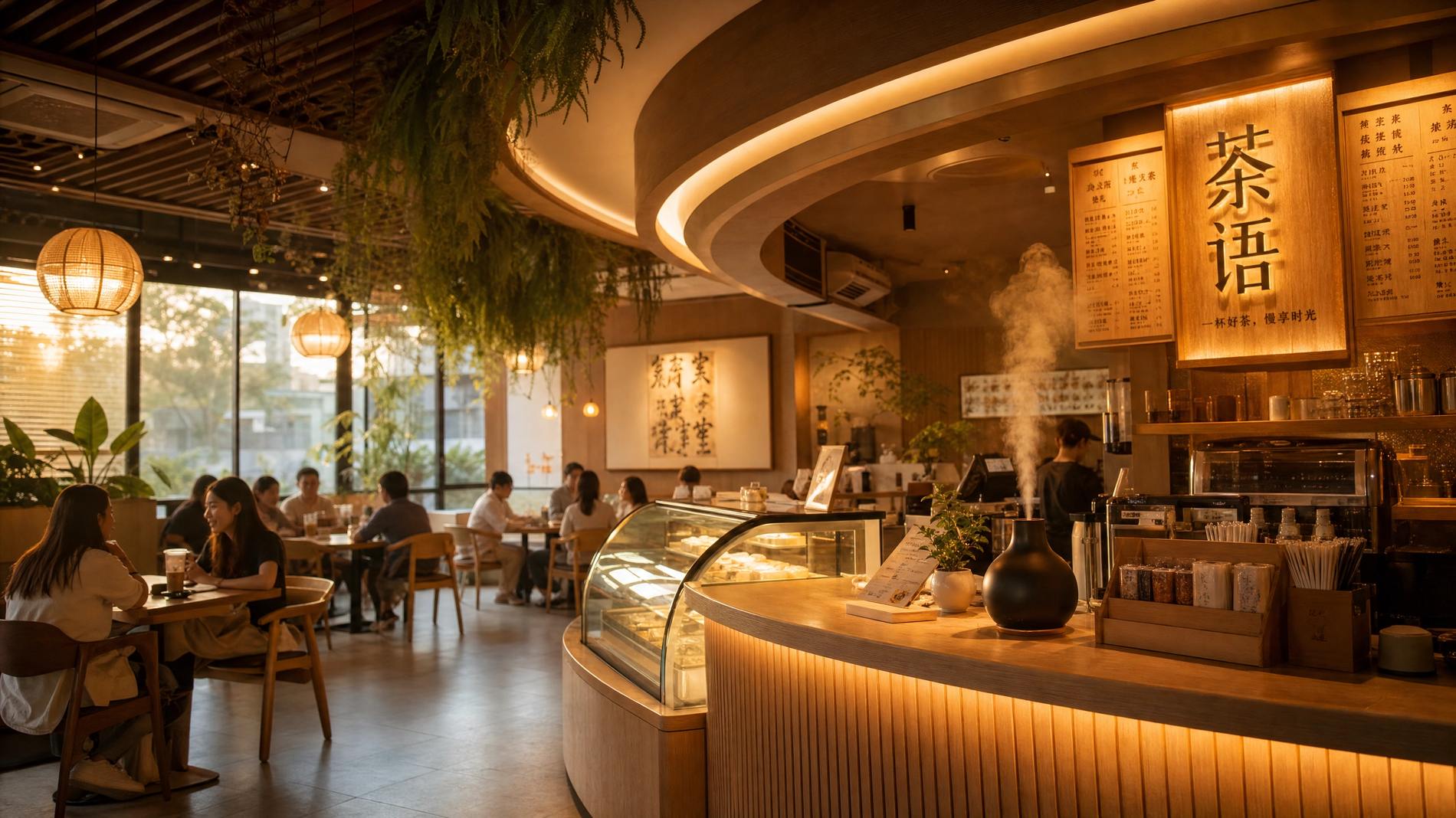
What is scent marketing? · Why it works · Does it work? · How it works in practice · What it costs · Scent marketing for F&B · Choosing a provider · FAQ
What is scent marketing?
Scent marketing (also called scent branding, ambient scenting or olfactory marketing) is the practice of giving a physical space a deliberate, signature smell that supports the brand. In a shop or F&B outlet, that scent does three jobs: it attracts people from outside, it makes the interior feel pleasant enough that they stay and spend, and it leaves a scent memory they connect to the brand. It's the difference between a space that's merely seen and one that's felt.
Why does scent work?
Smell is the only sense that bypasses the brain's rational filter. Scent signals travel almost directly to the limbic system — the amygdala and hippocampus, the seats of emotion and memory — before conscious thought catches up. That's why a smell can trigger a vivid memory or a sudden craving in an instant, and why scent is uniquely powerful for building brand recall. A logo is processed; a scent is felt.
Does scent marketing actually work?
The evidence across retail and hospitality is consistent:
- Shoppers in a pleasantly scented store spent about 20% more (Journal of Retailing).
- 84% of people preferred a product when it was shown in a scented room (Spangenberg et al., Washington State University).
- A 2020 meta-analysis of ambient-scent studies found sales lifts of 3–23%, and industry reports commonly cite around a 10% in-store lift alongside longer dwell time.
These figures vary by context — scent works best when it's pleasant, congruent with the product, and not overpowering. The right scent lifts results; a wrong or overdone one can hurt them, which is why matching and tuning matter.
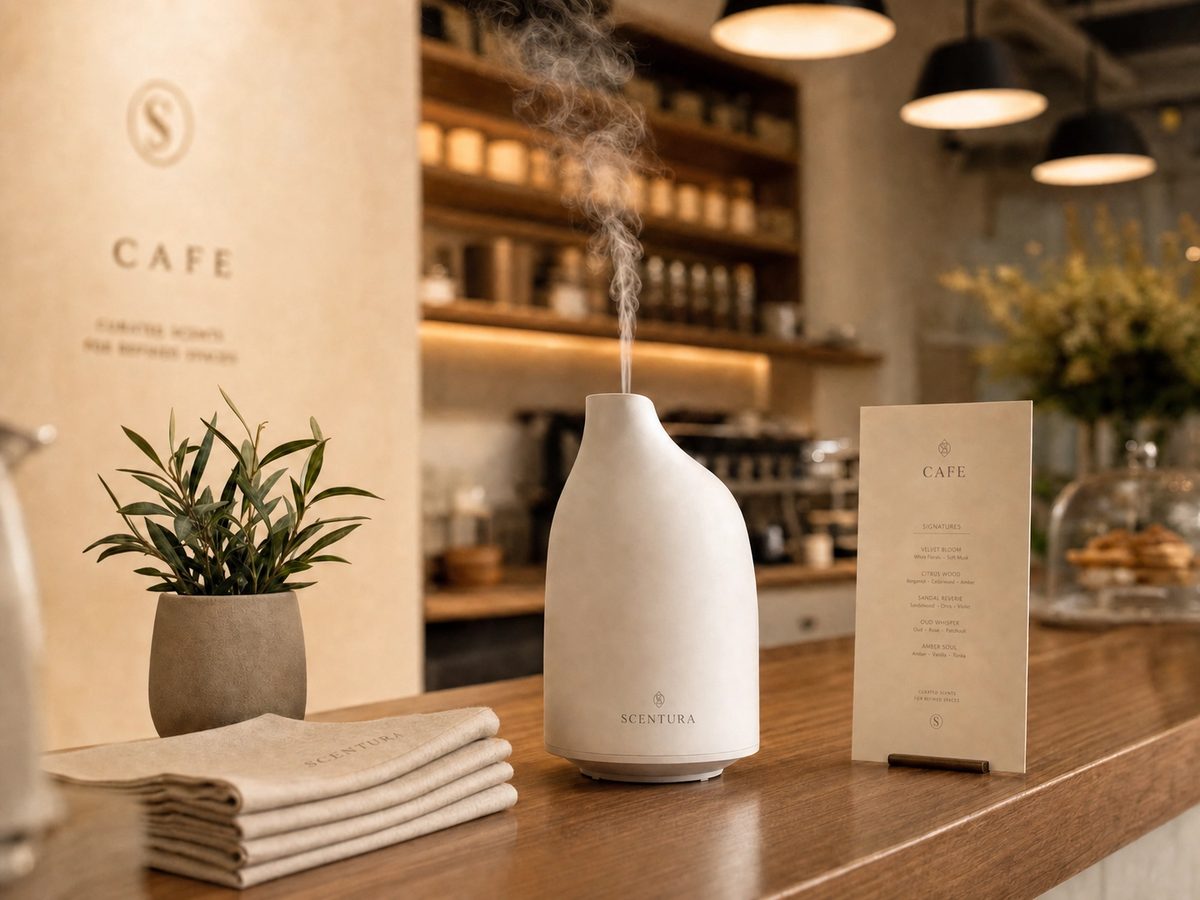
How does scent marketing work in practice?
A signature scent can be delivered through several formats, often in combination:
- In the air — cold-air diffusers, reed diffusers or scented candles fill the space, kept discreet or dressed as décor.
- On your products — scented hand soap, surfaces and cleaning supplies, so even the restroom and the just-wiped counter carry the brand.
- In their hands — scented menus, cups, packaging, labels and stickers that travel home with the customer and keep working there.
The take-home formats matter most over time: every time the scent reappears in someone's bag or kitchen, it re-fires the memory of your brand — repeat advertising you don't pay for again.
What does scent marketing cost in Singapore?
Pricing varies by provider, space size and diffusion method. Scentura is built to keep the risk low: a paid two-week live pilot — one upfront fee from S$50 for independent cafés, F&B and retail kiosks up to S$150 for larger or multi-level commercial spaces, credited to your first month if you continue and fully refunded if it isn't right — with results measured on your own sales, then an ongoing fixed monthly programme quoted to your space (single-space; multi-site and enterprise by quote), with no lock-in and no equipment to buy. A useful local advantage — Singapore's enclosed, air-conditioned shops hold scent well, so you need far less of it than an open-air space would, keeping ongoing costs low.
Scent marketing for F&B — the cold-drinks gap
Food and beverage is where scent is most powerful and most overlooked. Hot food has always sold itself by smell — think of a bakery or a coffee roaster. But cold drinks and desserts give off almost no aroma, so bubble tea shops, juice bars and dessert cafés have no natural scent signature at all. That's the gap a tuned signature scent fills, and it's exactly where Scentura focuses.
For category-specific guidance, see our pages on scent marketing for bubble tea shops and scent marketing for cafés in Singapore.
How to choose a scent marketing provider in Singapore
A few things to look for:
- Real, IFRA-compliant fragrance, true-to-product, not cheap synthetic oils.
- Proof, not promises — a provider willing to measure the lift on your actual sales before you commit.
- No lock-in — a pilot or cancel-anytime terms, so you're never trapped paying for something that isn't working.
- Fit for your category — F&B, and ideally cold F&B, has different needs from a hotel lobby or a car showroom.
Common questions
What is scent marketing?
Scent marketing is the deliberate use of a signature ambient scent to shape how customers feel and behave in a space — drawing them in, encouraging them to stay and spend, and building a smell they associate with the brand. It works because smell connects directly to the brain's centres for emotion and memory.
Does scent marketing really work?
Yes. Research in the Journal of Retailing found shoppers spent around 20% more in a scented store, a Washington State University study found 84% preferred a product shown in a scented room, and a 2020 meta-analysis found ambient-scent sales lifts of 3 to 23%.
How much does scent marketing cost in Singapore?
With Scentura it starts with a paid two-week live pilot — one upfront fee from S$50 for independent cafés, F&B and retail kiosks up to S$150 for larger or multi-level commercial spaces, credited to your first month if you continue and fully refunded if it isn't right. Ongoing service is a fixed monthly programme quoted to your space, with no lock-in. Costs elsewhere vary by provider, space size and the diffusion method used.
Is scent marketing suitable for small F&B businesses?
Yes. Singapore's enclosed, air-conditioned spaces hold scent well, so even a small café or bubble tea shop needs only a modest amount. A pilot-first, cancel-anytime model means a small business can test it on its own numbers before committing.
See what your brand could smell like.
A paid two-week pilot, credited to your first month and refunded if it isn't right. Fully managed, no lock-in.
Book a two-week pilot →